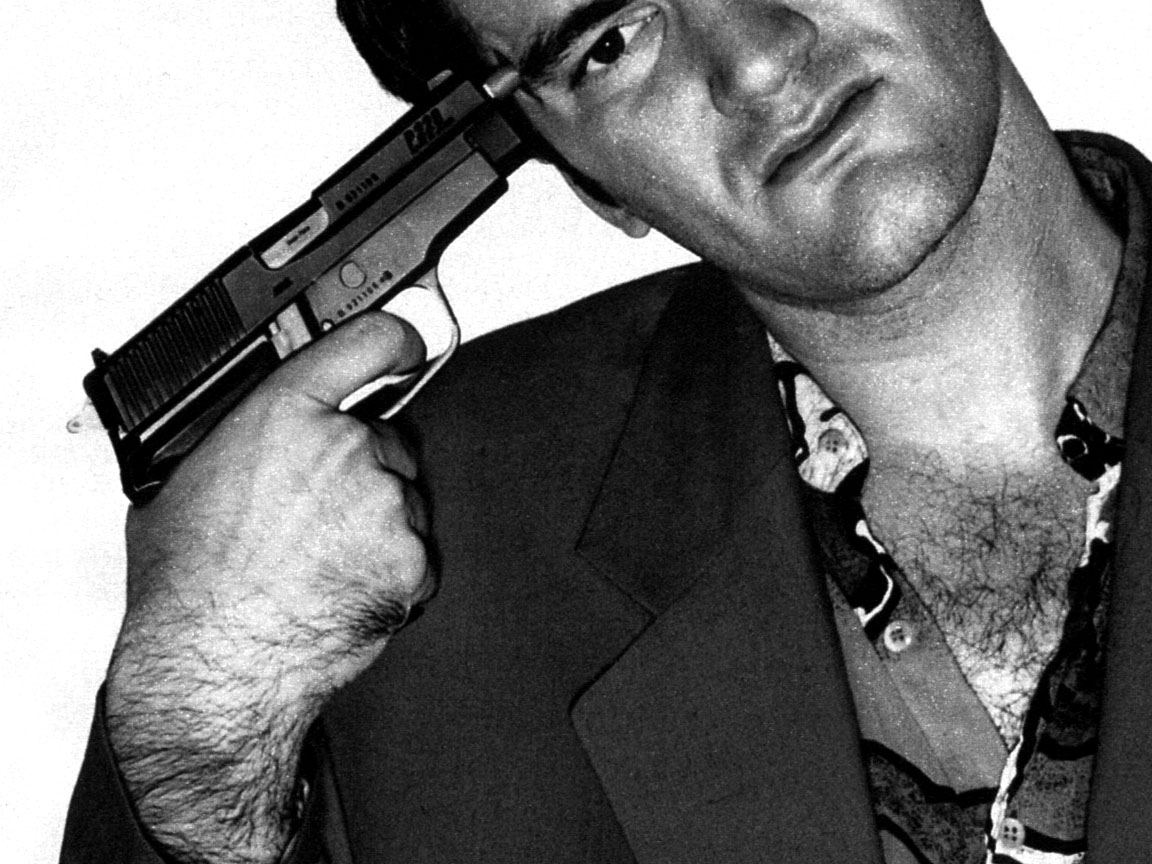
Inglourious Basterds and Fight club are both postmodern film's, this is proved in many ways; whether it be the intertextual references, Tarantino's foot fetish or Tyler Durden's IKEA catalogued apartment, In this essay i will be identifying intertextual references and other elements which make both movies, postmodern.
Inglourious Basterds is one of many of Quentin Tarantino's masterpieces as a director, grossing $320,351,773 in theatres worldwide. It is a film about the Americans putting together a secret mission to assassinate Adolf Hitler, the assasinators is a group of Jewish Americans, so in itself is a fairytale because Adolf Hitler reportedly commited suicide with a gun to the head, so with Jewish people in the movie killing Hitler, it is some what ironic as one of Adolf Hitler's policies was to get rid of all Jewish people due to them taking over the German nation and jobs etc. and then in the film he is murdered by them, in addition the Jewish soldiers also being American is just the cherry on top as it then portrays the Americans as the hero's of the world war 2, which in fact they weren'. The World War 2 and Hitlers death is what Jean-francois Lyotard would call a gran narrative.
In addition to the fairytale element mentioned above, Inglourious Basterds starts with "Once upon a time.." and ends in the woods, which is a renowned for being major elements of fairytales. Throughout the film the characters remain remarkably composed and clean, despite killing and being thrown around, also relating to the fairytale story. Inglourious Basterds works on a film logic. It doesn't make sense logically, however in the film it does.
Quentin Tarantino's foot fetish has been introduced to many of his movies; Kill Bill volumes, Pulp Fiction, The Girls of Death Proof and of course Inglourious Basterds when Christoph Waltz puts the shoe on the female actress it is including his foot fetish and also adding the fairytale of introducing a Cinderella element to the film. Tarantinos Foot fetish itself is postmodern, as you don't often see a scene centered on feet in movies whereas in his movies you get them a lot, also with people not liking feet becoming a popular thing it puts the audience on edge and makes them think how unusual it is, and how you wouldn't believe it would work however it does, therefore benig postmodern.
Inglourious Basterds has a number of intertextual references, including; The Battleship Potemkia with the Odessa steps sequence which is also referred twice in Nations Pride with the shot in the eye and the baby in a pram across the town square, in addition Nations Pride is also a intertextual reference being a film within a film, The Good The Bad The Ugly with the camera work and with it being a spaghetti western and within Inglourious Basterds the British officer makes a reference to the film 'White hell of pitz palu'.
Most movies and directors like to have a set and stick to that set, in Inglourious Basterds, Tarantino decides to introduce a birds eye view shot revealing the set, self reflexive - it shows that the film is a construction and therefore not real, this is a postmodern element. Where as some directors want the audiences to be endured by the film and feel like they are apart of the movie, Tarantino has used a camera shot to make sure they audience know they are in fact at the theatre watching a movie.
The acting in Inglourious Basterds is slightly over the top and could be viewed as 'parodic', as in it is more set for a stage on Broadway instead of a screen over the world or in the comfort of your home.
Aldo Raine, played by Brad Pitt is a southern American who comes across as a 'guy with demands' i say this because he requests a hundred skullcaps from the Jews participating in the mission, in addition the way he is portrayed verbally is different, he talks slow and yet loud, as if he wants his words to be heard and taken in.
Mike Myers, a renowned comedy actor takes the part of a British Colonel. For me, I believe Mike Myers shouldn't of been casted in this movie, globally he is known for roles such as Austin Powers where it is all abut humour, in the Inglourious Basterds role he has to play a 'mature' British Colonel and it just doesn't suit the part, however this would only be if you have seen him in previous films, other than that he plays the part very well.
Christoph Waltz played the role of Hans Landa and won an award for his performance, and i must say an award he truly deserved. His acting in his role was inspiring and invigorating and really draw the audience into the film.
Adolf Hitler was shown like a little school boy in the movie, the way he acted "Nein! Nein! Nein!" because he didn't get what he wanted and the way he dressed with his little cape. However, you cannot portray Adolf Hitler in any other way in a movie else you would get bad reviews, for example, if Adolf Hitler was the hero the film would probably fail.
The Violence in Inglourious Basterds is so violent it is some what comical. It is as if they are killing for fun, which they are, and Tarantino does not shy away from showing it, for example, early in the film when Eli Roth (Sgt. Donny Donowitz) hits the head of a German soldier with a baseball bat and does commentary along side it.
Fight Club is a popular David Fincher movie which grossed over $100,853,753 worldwide. It to casted Brad Pitt and became a must see movie before you die. The film is about a character played by Ed Norton who is having trouble with his day to day life, he attends social meetings and hates his job, until he meets Tyler Durden played by Brad Pitt, which introduces a soap seller who is buffed out with muscle and a trendy hair cut, everything Ed Norton's character is not.The film goes on to Tyler Durden and Ed Nortons character starting a Fight Club for men, which then goes global and they start performing terrorist tasks/homework assignments, although it may sound bad, Tyler Durden had planned it well that what he was doing was sending a message and restarting everybody fresh, for example, threatening to kill a supermarket owner because he is running a store and not doing what he wanted to do which was a vet, Tyler does this do scare him, and he scares him so much that we, the audience are lead to believe that, that store owner will now become a vet and live his life how he always wanted to. Fight Club doesn't try to be real but by including the elements and effects that it does, then it is realistic. The film is about what we tolerate as realistic/realism.
A major element within Fight Club that is postmodern and cannot be missed is the IKEA catalogue scene where everything in Ed Nortons apartment is shown to be labelled and priced, similar to an advert. This links to the materialism evident in the early part of the film where he believes that his possessions make him who he is, where as Tyler Durden disagrees later in the film and we find out he blows up Ed Nortons apartment to prove that point. "What you own ends up owning you".
Throughout the film we the audience get quick glimpses of subliminal messages of penis' which links into what Tyler Durden does when he is not making soap, he puts subliminal messages into children's movies, so in fact it looks like Tyler Durden has put a subliminal message within Fight Club throughout, therefore being self reflexive. Before we even meet Tyler Durden we catch subliminal messages of him, which at the time dose not connect with the audience until we meet him.
"Everything is a copy of a copy of a copy" is the famous quote of the movie, and links in well what Jacques Derrida proposed that 'a text cannot belong to no genre, it cannot be without... a genre. Every text participates in one or several genres, there is no genreless text'. The quote is also true, movies such as Kick Ass has took elements from films such as Spider Man and Superman to make that film, and Scott Pilgrim Vs. The World has took video game elements and introduced them into the film.
Breaking the 4th wall happens twice within the film; once with Ed Norton's character when he tells the audience about the 'cigarette burns' on the screen, and secondly, when Brad Pitt talks directly into the camera with the background shaking. It lets the audience know that they are watching a film, similar to Inglourious Bastards and Tarantino's Set show. This is a very postmodern element, breaking he fourth wall, and addressing the audience, it is in a way a personal message to them notifying them that they are watching a movie and that it's all acted and not real.
The Violence in Fight Club is very gory, bloody and hard to watch, but yet realistic, it has to be due to the title of the film 'FIGHT club' so you audience should expect fights and blood. The sounds of the violence is realistic to a certain degree, the punches sound realistic and when the head is hitting the concrete ground it sounds what you would think it should sound like, however you know as a audience there would have been some sound tweaking. Visually the violence looks real, we see blood, cuts and bruises which we would expect to see during and after a fight.
There is little to no intertextual references in Fight Club, only when Tyler Durden says "Run Forrest Run" to the supermarket owner, in reference to Forrest Gump.
The Narrative has been on the version of reality of an unreliable narrator as it is all in Ed Nortons mind. We as a audience are asked "what was the point?" Yes, the film was working throughout with the audience thinking Tyler Durden and Ed Norton's character was two different people, but then at the end when we find out they are both the same person and Brad Pitt is just a spec of Ed Nortons mind we have to rewind and rewatch/restudy the film and then we go "Oh".
The Casting of Brad Pitt is important because he is a major Hollywood star with the Ab's and the cool hair style and yet in the movie his character is questioning Hollywood, mentioning Calvin Klein, models, Ikea etc.
The Postmodern punch line for the movie is that you can be ordinary and still achieve great success, even if it is criminal and wrong.
(1819 words)