Showing posts with label postmodernism. Show all posts
Showing posts with label postmodernism. Show all posts
Wednesday, 6 April 2011

Wednesday, 23 March 2011
Postmodern & Music
The postmodern sensibility that anything can be considered cool in an ironic ‘I know it’s bad, but it’s so bad it’s good’ way.
Jedward became a nations disaster when they sailed through the stages of X factor, at the start everybody hated them, however by the end of the show, people liked them because they were so bad and they knew people hated them it actually made people think twice about hating them.
Jedward became a nations disaster when they sailed through the stages of X factor, at the start everybody hated them, however by the end of the show, people liked them because they were so bad and they knew people hated them it actually made people think twice about hating them.

Work that is created based (entirely or in part) on older material. This incorporates sampling and will take you from the realms of hip hop culture transporting you finally in today’s modern fragmented musical landscape. You will have to listen to some of the artists to fully appreciate them and their work.
Audiences that are both niche and mainstream. E.g.: Radio 1, 1xtra, BBC6, XFM.
Radio 1's audience is wider than say BBC6 however they both become similar when Radio 1's shows become a niche show where they focus on one type of music, usually shows in the evening for Radio 1, because during the day the shows are mainsteam shows and attract all audiences due to the range of music played.
The ways in which people engage and listen to music e.g.: iPod, DAB, mobile phones etc.
The way people engage in music today has not just improved the way music is listened to but also how the music is created. A Few years ago music would be produced so that you hear elements of the song in one headphone and another element in the other headphone, whereas today most music is focused on the centred headphones so the music meets in the middle.
With devices being made like iPods, Mp3's and phones being able to play music, it has made listening to music anytime and anywhere even more easier. I believe there is not a day where someone in the world does not hear some sort of music. Music doesn't have to be sold and viral, it can be anything from birds chirping to a baby crying, as Timbaland (famous producer) uses in some of his songs, the natural sound to create music.
The legal issues surrounding sampling. (Led Zeppelin ‘borrowed’ heavily from old bluesmen and it took years for the songwriters to be credited and paid royalties. The same group took a hard-line stance initially to be sampled by hip hop groups.)
With music devices being created, music today is mostly purchased online and are file copy's instead of hard copied discs and vinyls, this has made purchasing and getting hold of music a lot easier, however has also allowed illegal downloading and sharing of music across the globe. With music being illegally downloaded, the record label and the artist(s) are missing out on profits, and their are many campaigns to go hard on illegal downloading, however it's such a mainstream thing to do these days it is hard to get everyone.
Today you can get held of music before it has even been released and this is due to illegal downloading, Albums are pushed forward of the release date because record labels want to get an income, and if the album is already available online and is free, nobody is going to wait the extra 2 months for the album to be released just to get it in a case and then import onto the computer which then goes onto your music device when you can download the album as a file and it can be on your music device in minutes.

The state of the music industry incorporating any recent developments that change how we access/ interact with music e.g.: Spotify, X Factor, iTunes, illegal downloading, free cds with newspapers etc.
The music industry i believe is collapsing and being the strongest ever at the same time. I believe the industry is collapsing on producing physical copy's of albums etc. but with music being able to post online it is then available to a global audience.
Tv shows such as X Factor has a huge influence on music today, a big example of this is for the passed 9 or so years, 8 of the X Factor winners have had christmas number ones, the only year was when a major onlnie campaign started for Raise Against The Machine's heavy rock song to be number one instead of the X Factor winner, people may have hated the song but they hated how X Factor was taking over the charts and influencing what people listen to more.
Theres a saying my friend made which was something along the lines of "i never listen to radio 1 or any chart shows, i hate them. They are all the same crap, all dubstep, similar lyrics, all copies.." at the time i argued against his point, however it is true, songs are so majorly influenced by other songs its incredible.
Monday, 21 March 2011
Postmodern music - Original or Authenticity Disrupted
Music has changed so much we now question whether they are original or authenticity disrupted?
Well as postmodern has taught us that nothing is original anymore, everything is a copy of a copy of a copy, segments of songs picked and tweaked to meet the artists needs, whether it be a beat or lyrics.
Dan Black is a good example of this as he has used many segements of other songs and put them together to create a song, which has then gone on the be manipulated and mixed further.
Dan Black - Symphonies is extermely postmodern.
These days anybody can make music and call themselves original, however they are no more original than the bible, as like the bible sections are added constantly and changed. Modification of songs has became so easy that it can be done with fewer than FIVE clicks, with the use of correct hardware and software. Software like Virtual DJ allows someone to drag and drop tracks into the software and manipulate the song, whether it be by tempo or special effects, they can have two songs playing at once, known as beat mixing, where they play two songs at the same time with similar beats and tweak it up.
DJ Shadow is one of the original artists to make music, even if some of the elements of his music are taken from some original music, this is because he takes the music, makes it into his own samples and then DJ's with the samples live, instead of DJ's today who have the tracks mixed already on their laptop and all they have to do is press play.
iDaft is an application on the Internet (Web 2.0) and iPhone, it is Daft Punk's way of allowing the listeners to participate in Daft Punk's music, and edit/create their own songs, using elements of Daft Punk's 'Harder Better Faster Strong' & 'Technologic', it allows the listeners to feel like they are apart of Daft Punk and participate in creating music.
.
Web 2.0 is a website that allows users to interact fully. An example of this is iDaft.
Well as postmodern has taught us that nothing is original anymore, everything is a copy of a copy of a copy, segments of songs picked and tweaked to meet the artists needs, whether it be a beat or lyrics.
Dan Black is a good example of this as he has used many segements of other songs and put them together to create a song, which has then gone on the be manipulated and mixed further.
Dan Black - Symphonies is extermely postmodern.
These days anybody can make music and call themselves original, however they are no more original than the bible, as like the bible sections are added constantly and changed. Modification of songs has became so easy that it can be done with fewer than FIVE clicks, with the use of correct hardware and software. Software like Virtual DJ allows someone to drag and drop tracks into the software and manipulate the song, whether it be by tempo or special effects, they can have two songs playing at once, known as beat mixing, where they play two songs at the same time with similar beats and tweak it up.
DJ Shadow is one of the original artists to make music, even if some of the elements of his music are taken from some original music, this is because he takes the music, makes it into his own samples and then DJ's with the samples live, instead of DJ's today who have the tracks mixed already on their laptop and all they have to do is press play.
iDaft is an application on the Internet (Web 2.0) and iPhone, it is Daft Punk's way of allowing the listeners to participate in Daft Punk's music, and edit/create their own songs, using elements of Daft Punk's 'Harder Better Faster Strong' & 'Technologic', it allows the listeners to feel like they are apart of Daft Punk and participate in creating music.
.
Web 2.0 is a website that allows users to interact fully. An example of this is iDaft.
Tuesday, 15 March 2011
In what ways can Inglourious Basterds and Fight Club be considered postmodern?
Inglourious Basterds and Fight club are both postmodern film's, this is proved in many ways; whether it be the intertextual references, Tarantino's foot fetish or Tyler Durden's IKEA catalogued apartment, In this essay i will be identifying intertextual references and other elements which make both movies, postmodern.
Inglourious Basterds is one of many of Quentin Tarantino's masterpieces as a director, grossing $320,351,773 in theatres worldwide. It is a film about the Americans putting together a secret mission to assassinate Adolf Hitler, the assasinators is a group of Jewish Americans, so in itself is a fairytale because Adolf Hitler reportedly commited suicide with a gun to the head, so with Jewish people in the movie killing Hitler, it is some what ironic as one of Adolf Hitler's policies was to get rid of all Jewish people due to them taking over the German nation and jobs etc. and then in the film he is murdered by them, in addition the Jewish soldiers also being American is just the cherry on top as it then portrays the Americans as the hero's of the world war 2, which in fact they weren'. The World War 2 and Hitlers death is what Jean-francois Lyotard would call a gran narrative.
In addition to the fairytale element mentioned above, Inglourious Basterds starts with "Once upon a time.." and ends in the woods, which is a renowned for being major elements of fairytales. Throughout the film the characters remain remarkably composed and clean, despite killing and being thrown around, also relating to the fairytale story. Inglourious Basterds works on a film logic. It doesn't make sense logically, however in the film it does.
Quentin Tarantino's foot fetish has been introduced to many of his movies; Kill Bill volumes, Pulp Fiction, The Girls of Death Proof and of course Inglourious Basterds when Christoph Waltz puts the shoe on the female actress it is including his foot fetish and also adding the fairytale of introducing a Cinderella element to the film. Tarantinos Foot fetish itself is postmodern, as you don't often see a scene centered on feet in movies whereas in his movies you get them a lot, also with people not liking feet becoming a popular thing it puts the audience on edge and makes them think how unusual it is, and how you wouldn't believe it would work however it does, therefore benig postmodern.
Inglourious Basterds has a number of intertextual references, including; The Battleship Potemkia with the Odessa steps sequence which is also referred twice in Nations Pride with the shot in the eye and the baby in a pram across the town square, in addition Nations Pride is also a intertextual reference being a film within a film, The Good The Bad The Ugly with the camera work and with it being a spaghetti western and within Inglourious Basterds the British officer makes a reference to the film 'White hell of pitz palu'.
Most movies and directors like to have a set and stick to that set, in Inglourious Basterds, Tarantino decides to introduce a birds eye view shot revealing the set, self reflexive - it shows that the film is a construction and therefore not real, this is a postmodern element. Where as some directors want the audiences to be endured by the film and feel like they are apart of the movie, Tarantino has used a camera shot to make sure they audience know they are in fact at the theatre watching a movie.
The acting in Inglourious Basterds is slightly over the top and could be viewed as 'parodic', as in it is more set for a stage on Broadway instead of a screen over the world or in the comfort of your home.
Aldo Raine, played by Brad Pitt is a southern American who comes across as a 'guy with demands' i say this because he requests a hundred skullcaps from the Jews participating in the mission, in addition the way he is portrayed verbally is different, he talks slow and yet loud, as if he wants his words to be heard and taken in.
Mike Myers, a renowned comedy actor takes the part of a British Colonel. For me, I believe Mike Myers shouldn't of been casted in this movie, globally he is known for roles such as Austin Powers where it is all abut humour, in the Inglourious Basterds role he has to play a 'mature' British Colonel and it just doesn't suit the part, however this would only be if you have seen him in previous films, other than that he plays the part very well.
Christoph Waltz played the role of Hans Landa and won an award for his performance, and i must say an award he truly deserved. His acting in his role was inspiring and invigorating and really draw the audience into the film.
Adolf Hitler was shown like a little school boy in the movie, the way he acted "Nein! Nein! Nein!" because he didn't get what he wanted and the way he dressed with his little cape. However, you cannot portray Adolf Hitler in any other way in a movie else you would get bad reviews, for example, if Adolf Hitler was the hero the film would probably fail.
The Violence in Inglourious Basterds is so violent it is some what comical. It is as if they are killing for fun, which they are, and Tarantino does not shy away from showing it, for example, early in the film when Eli Roth (Sgt. Donny Donowitz) hits the head of a German soldier with a baseball bat and does commentary along side it.
Fight Club is a popular David Fincher movie which grossed over $100,853,753 worldwide. It to casted Brad Pitt and became a must see movie before you die. The film is about a character played by Ed Norton who is having trouble with his day to day life, he attends social meetings and hates his job, until he meets Tyler Durden played by Brad Pitt, which introduces a soap seller who is buffed out with muscle and a trendy hair cut, everything Ed Norton's character is not.The film goes on to Tyler Durden and Ed Nortons character starting a Fight Club for men, which then goes global and they start performing terrorist tasks/homework assignments, although it may sound bad, Tyler Durden had planned it well that what he was doing was sending a message and restarting everybody fresh, for example, threatening to kill a supermarket owner because he is running a store and not doing what he wanted to do which was a vet, Tyler does this do scare him, and he scares him so much that we, the audience are lead to believe that, that store owner will now become a vet and live his life how he always wanted to. Fight Club doesn't try to be real but by including the elements and effects that it does, then it is realistic. The film is about what we tolerate as realistic/realism.
A major element within Fight Club that is postmodern and cannot be missed is the IKEA catalogue scene where everything in Ed Nortons apartment is shown to be labelled and priced, similar to an advert. This links to the materialism evident in the early part of the film where he believes that his possessions make him who he is, where as Tyler Durden disagrees later in the film and we find out he blows up Ed Nortons apartment to prove that point. "What you own ends up owning you".
Throughout the film we the audience get quick glimpses of subliminal messages of penis' which links into what Tyler Durden does when he is not making soap, he puts subliminal messages into children's movies, so in fact it looks like Tyler Durden has put a subliminal message within Fight Club throughout, therefore being self reflexive. Before we even meet Tyler Durden we catch subliminal messages of him, which at the time dose not connect with the audience until we meet him.
"Everything is a copy of a copy of a copy" is the famous quote of the movie, and links in well what Jacques Derrida proposed that 'a text cannot belong to no genre, it cannot be without... a genre. Every text participates in one or several genres, there is no genreless text'. The quote is also true, movies such as Kick Ass has took elements from films such as Spider Man and Superman to make that film, and Scott Pilgrim Vs. The World has took video game elements and introduced them into the film.
Breaking the 4th wall happens twice within the film; once with Ed Norton's character when he tells the audience about the 'cigarette burns' on the screen, and secondly, when Brad Pitt talks directly into the camera with the background shaking. It lets the audience know that they are watching a film, similar to Inglourious Bastards and Tarantino's Set show. This is a very postmodern element, breaking he fourth wall, and addressing the audience, it is in a way a personal message to them notifying them that they are watching a movie and that it's all acted and not real.
The Violence in Fight Club is very gory, bloody and hard to watch, but yet realistic, it has to be due to the title of the film 'FIGHT club' so you audience should expect fights and blood. The sounds of the violence is realistic to a certain degree, the punches sound realistic and when the head is hitting the concrete ground it sounds what you would think it should sound like, however you know as a audience there would have been some sound tweaking. Visually the violence looks real, we see blood, cuts and bruises which we would expect to see during and after a fight.
There is little to no intertextual references in Fight Club, only when Tyler Durden says "Run Forrest Run" to the supermarket owner, in reference to Forrest Gump.
The Narrative has been on the version of reality of an unreliable narrator as it is all in Ed Nortons mind. We as a audience are asked "what was the point?" Yes, the film was working throughout with the audience thinking Tyler Durden and Ed Norton's character was two different people, but then at the end when we find out they are both the same person and Brad Pitt is just a spec of Ed Nortons mind we have to rewind and rewatch/restudy the film and then we go "Oh".
The Casting of Brad Pitt is important because he is a major Hollywood star with the Ab's and the cool hair style and yet in the movie his character is questioning Hollywood, mentioning Calvin Klein, models, Ikea etc.
The Postmodern punch line for the movie is that you can be ordinary and still achieve great success, even if it is criminal and wrong.
(1819 words)
Wednesday, 9 February 2011

Monday, 7 February 2011
What is Postmodernism?
Postmodernism is difficult to define, because to define it would violate the postmodernists premise that no definite terms, boundaries, or absolute truths exist. In this article, the term postmodernism will remain vague, since those who claim to be postmodernists have varying beliefs and opinions on issues. Postmodernism is a concept applied in media texts which suggests that artists and audiences are now prepared to accept a media text may not be true to reality, and the techniques used to make this departure from realism.
Tuesday, 1 February 2011
Further Criticisms Of Postmodernism
Rosenau (1993) Rosenau identifies seven contradictions in Postmodernism:
1. Its anti-theoretical position is essentially a theoretical stand.
2. While Postmodernism stresses the irrational, instruments of reason are freely employed to advance its perspective.
3. The Postmodern prescription to focus on the marginal is itself an evaluative emphasis of precisely the sort that it otherwise attacks.
4. Postmodernism stress intertextuality but often treats text in isolation.
5. By adamently rejecting modern criteria for assessing theory, Postmodernists cannot argue that there are no valid criteria for judgment.
6. Postmodernism criticizes the inconsistency of modernism, but refuses to be held to norms of consistency itself.
7. Postmodernists contradict themselves by relinquishing truth claims in their own writings.
2. While Postmodernism stresses the irrational, instruments of reason are freely employed to advance its perspective.
3. The Postmodern prescription to focus on the marginal is itself an evaluative emphasis of precisely the sort that it otherwise attacks.
4. Postmodernism stress intertextuality but often treats text in isolation.
5. By adamently rejecting modern criteria for assessing theory, Postmodernists cannot argue that there are no valid criteria for judgment.
6. Postmodernism criticizes the inconsistency of modernism, but refuses to be held to norms of consistency itself.
7. Postmodernists contradict themselves by relinquishing truth claims in their own writings.
Yet More Criticism Of Postmodernism
Schematic Differences between Modernism and Postmodernism | |
Modernism | Postmodernism |
romanticism/symbolism | paraphysics/Dadaism |
purpose | play |
design | chance |
hierarchy | anarchy |
matery, logos | exhaustion, silence |
art object, finished word | process, performance |
distance | participation |
creation, totalization | deconstruction |
synthesis | antithesis |
presence | absence |
centering | dispersal |
genre, boundary | text, intertext |
semantics | rhetoric |
paradigm | syntagm |
hypotaxis | parataxis |
metaphor | metonymy |
selection | combination |
depth | surface |
interpretation | against interpretation |
reading | misreading |
signified | signifier |
lisible (readerly) | scriptible |
narrative | anti-narrative |
grande histoire | petite histoire |
master code | idiolect |
symptom | desire |
type | mutant |
genital, phallic | polymorphous |
paranoia | schizophrenia |
origin, cause | difference-difference |
God the Father | The Holy Ghost |
Metaphysics | irony |
determinacy | indeterminacy |
transcendence | immanence |
(SOURCE: Hassan "The Culture of Postmodernism" Theory, Culture, and Society, V 2 1985, 123-4.)
A Paradox
Postmodernists are often seen as starting from the following position
'There are no absolutes.'
Lyotard certainly echoed elements of this by viewing metanarratives (Grand Narratives) as dead. What is the obvious contradiction in both these viewpoints?
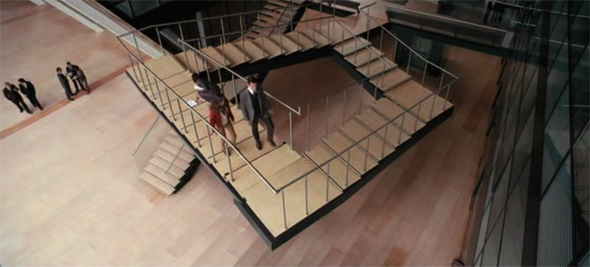
Hollywood Grand Narratives
Remember Marshall McLuhan view that 'the medium is the message', this is certainly the case with Hollywood cinema. In terms of medium, film genre serves as the medium
There is a view that only 7 narratives exist
Overcoming the Monster A terrifying, all-powerful, life-threatening monster whom the hero must confront in a fight to the death. An example of this plot is seen in Beowulf, Jack and the Beanstalk, and Dracula.
Pluralism and relativism
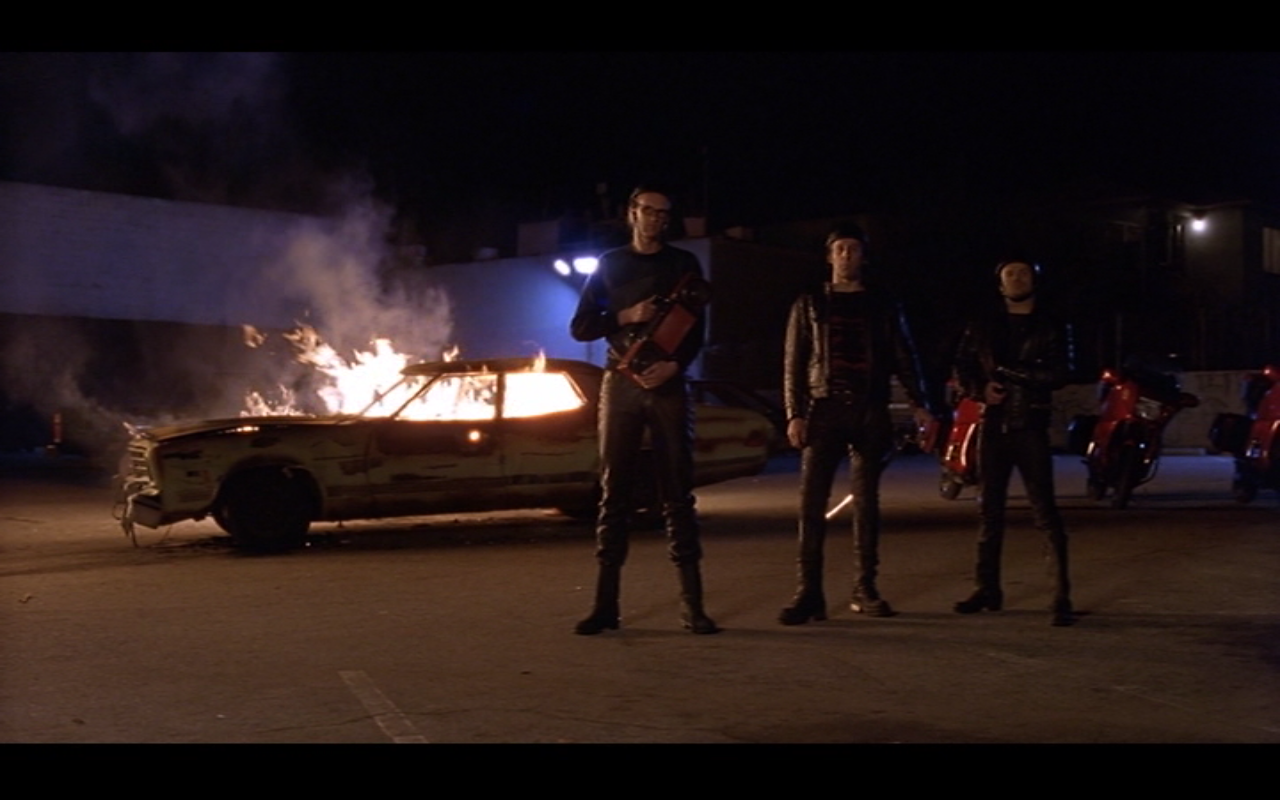
Pluralism is simply a belief that there is no one answer to anything, this is much like postmodernism. There are two types of pluralism however:
Firstly there is Normative pluralism/relativism (or nihilism) is essentially the acceptance of all narratives, expressions and norms, claiming that no one is better than all the others.
Secondly, there is a kind of postmodernism which is pluralist in the sense that it accepts different views, without denying that something is better than other things.
In this latter case of pluralism or postmodernism, we are faced with the old idea of defending other people’s right to say whatever they wish, without accepting their points of view. It is this second kind which allows some form of rebuttal to criticisms of Postmodernism (like those put forward by Jameson) and perhaps stops it being so annoyingly smug a theory.
Hit Girl Essay (KICK-ASS) attempt 1
Hit Girl - Postmoder Heroine or "morally reprehensible"?
I believe the way Hit Girl is portrayed in the hit movie 'Kick Ass' is complex, mystifying and blurring, all in all being confusing, i believe this because of the scenes within the movie such as when she is looking innocent in some scenes whether it be with a cup of hot chocolate with marshmallows or even in the cold looking wrapped up, however Hit Girl can look innocent no matter what she is doing when she isn't killing, this is because our society today implies that anyone below the age of around sixteen is innocent because we don't expect them to know and do the stuff adults do. So in addition when we witness Hit girl killing people and using the word 'c*nt' we are shocked and yet intrigued as an audience, however it depends who you are on your reaction. We are shocked because we don't expect a young girl to be using such words, in addition we are intrigued because of the shockness, for example "she swore!? what else can she do or say?" it can leave the audience wanting to see how much of a 'bad ass' she is.

Hit Girl shares a hot chocolate with double marshmallows with her father.
In the image to the left, we are witnessing a young girl and her farther having a hot drink. Totally looking innocent, however the faces on their expression can lead to another discussion of "what are they looking at?"
In this image we as a audience stereotypically think this is fine and how it should be, and all she is missing is a cuddly toy.
Hit Girl in School uniform

In the image to the right we are shown a state of Hit Girl we are used to from the comic books with a weapon. However, with Hit Girl wearing a school uniform it makes a sort of disjunction because of the innocence of the uniform and the bad assness with the silenced pistol.
This poster for Empire would have gotten many complaints for the actress only being twelve years of age and posing like that holding a weapon, even if it was to promote a film.
However in these modern day's adults dress up as children at the weekend, whether it be in a school uniform or even in a giant nappy and adding their own 'touches' to the uniform whether it be with the short being tied up like a bow or the skirt being ridiculously short. So we have to ask ourselves "are we convincing the youth its fine to dress like this?"
 Hit Girl in her superhero costume
In the image to the left, again Hit Girl is looking innocent yet mysterious. In comparison to the image above in the school uniform she is wearing more clothes and has less skin showing, yet again holding a weapon. in this picture she is wearing a eye mask which adds to her mysterious identity, similar to such comic heroes as Robin from Batman, Cat woman etc.
From just looking at this image i get the feeling she is good and means well, possibly because their is light shining around her in a god like figure.
 Hit Girl as portrayed in the comic. The text box reads "She was John Rambo crossed with Polly Pocket"
The image to the right is how Hit Girl is portrayed in the comic book.
Samurai to the neck and blood spurting out all over the picture and Hit Girl. This is where the disjuncture comes in, a 11 year old girl killing a man, stereotypically not meant to be.
In conclusion Hit Girl could be looked at as morally reprehensible because she is a 11-12 year old killing people and using words such as ''c*nt's", however, Hit Girl could also be portrayed as a postmodern heroine because it is different because she is a 11-12 year old killing people and calling people "c*nt's" which makes our human stereotypical mind think about the current situation. So if possible i believe the morally reprehensible backs up the postmodern heroine by being different and making our minds think "hold on, shes 12, killing people brutally and swearing..this isn't natural." I think to fully understand and be able to discuss and decide the viewer must watch the whole of kick-ass to be able to make a fair judgment.
Subscribe to:
Posts (Atom)